The Metropolitan Museum of Art Audio Guide
An Egyptian temple, a blue hippo, and a painting with a famous mistake. Six illustrated chapters, about 12 minutes. Pick your narrator.
Full transcript
Tap any sentence to jump there. Switch tone above to read that version.
Storyteller tone · 12:05 · voice: en-GB-RyanNeural
Chapter 1: A Museum Born at a Party in Paris
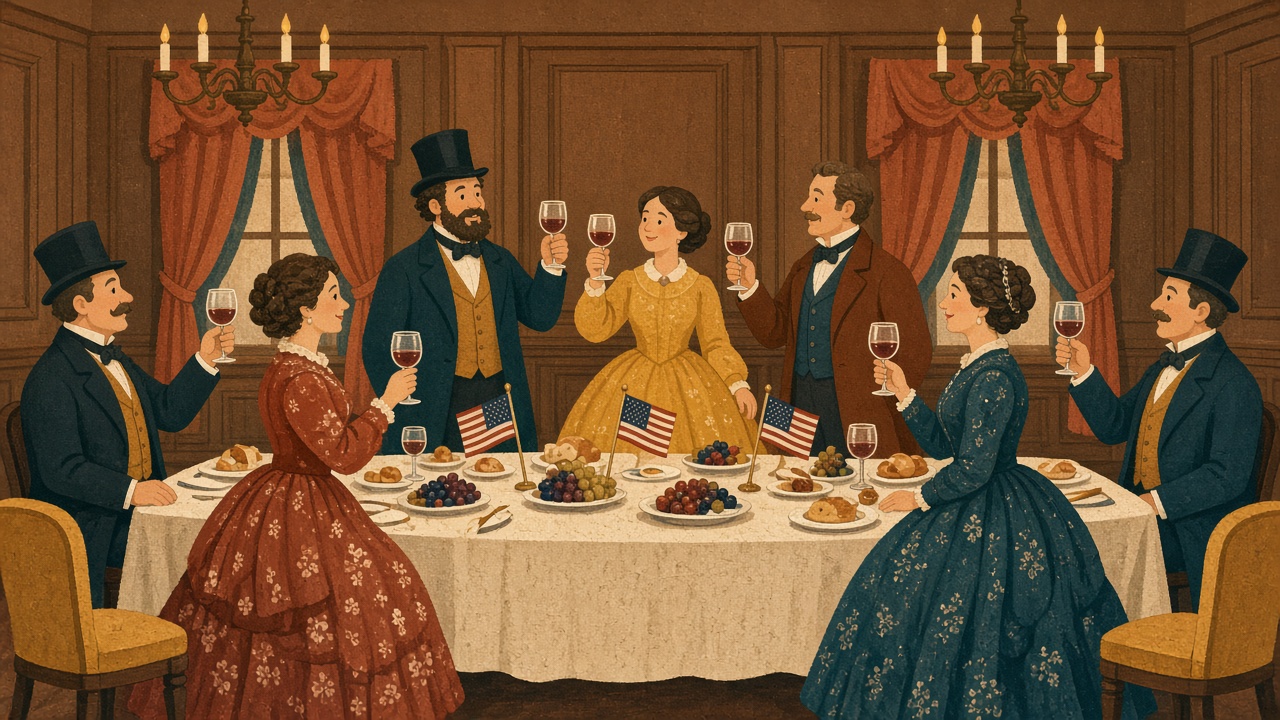
Paris, the Fourth of July, 1866. Far from home, a group of Americans gathers to celebrate their nation's birthday. Glasses are raised, speeches are made, and then a lawyer named John Jay, grandson of the first Chief Justice of the United States, rises with a proposal. America, he says, should have a great museum of art, a museum to stand beside the Louvre. The idea settles over the room like a spell, and it travels home across the ocean. You are standing now in the Great Hall of that dream come true: the Metropolitan Museum of Art. Look up into the domes, at the arches and the light. Breathe in the hush of a place that holds some five thousand years of human making. Back in New York, Jay's idea found allies: bankers, painters, civic leaders. In 1870 the museum was founded, though it owned not a single painting. Its very first object was a Roman sarcophagus, a stone coffin, an oddly solemn beginning. In 1872 the museum opened its doors in a borrowed building on Fifth Avenue. It moved again, and then, in 1880, it found its home here, at the edge of Central Park, in a building of red brick and pointed Gothic arches. That first building never left. As the museum grew, new wings wrapped around it, and today a fragment of its old brick facade stands indoors, near the Lehman wing, like a memory the museum chose to keep inside itself. The collection grew too, gift by gift, purchase by purchase, until it numbered well over a million objects. No one sees them all. Many have tried. But before we step into the galleries, let us return to the street, to the grand front of the building that greets millions each year. For high above the steps, in plain sight, lies a secret: four great blocks of stone, waiting for more than a century to become what they were meant to be.
Chapter 2: The Unfinished Front Door
On the steps of the Met, the city slows down. People eat lunch here, wait for friends, watch the traffic of Fifth Avenue roll past. Turn and look up at the facade, all columns and arches and noble stone. It was the vision of Richard Morris Hunt, one of the leading American architects of the nineteenth century. He did not live to see it finished. After his death in 1895, his son, Richard Howland Hunt, carried the work forward, and the new front opened to the public in 1902. Now look closely at the tops of the paired columns. There, rough and blocky, sit great pieces of uncarved stone. They were meant to become sculpture, groups representing the great ages of art, perhaps Egypt, Greece, the Renaissance and the modern world. But the money ran out. The carvers never came. And so, for more than a century, the grandest art museum in America has carried four unfinished thoughts on its brow. The facade waited for art in other places, too. Its niches stood empty until 2019, when the Met invited the artist Wangechi Mutu to fill them, and four bronze figures took their seats above the street. The rough blocks remain, unchanged. There is something quietly moving about that. A building devoted to finished masterpieces, wearing its own unfinished work openly, like a promise not yet kept. Down on the sidewalk, the smell of hot dog carts mixes with the sound of buses. This, too, is part of the Met: the meeting of the everyday and the extraordinary. Now step inside, and turn toward the Egyptian galleries. Somewhere ahead, behind a wall of glass and beside a still pool of water, stands something you would never expect to find in Manhattan. An entire temple, built when Rome ruled Egypt, carried across the sea stone by stone. And not far away, a small blue hippopotamus, guarding his secrets.
Chapter 3: A Temple and a Hippo
The light changes as you enter. A vast room, a wall of slanted glass, the trees of Central Park beyond, and before you, on a raised platform beside a reflecting pool, the Temple of Dendur. It was built around 15 B.C., when Egypt was ruled by Rome. On its walls, the emperor Augustus appears dressed as a pharaoh, offering gifts to the gods of the Nile. For nearly two thousand years it stood on the riverbank in Nubia, in the south of Egypt. Then, in the 1960s, Egypt began building the Aswan High Dam. The rising waters would swallow temples, tombs and villages. Nations around the world joined a great rescue, and the United States helped. In gratitude, in 1965, Egypt gave the Temple of Dendur to the American people. Cities across the country hoped to receive it. The Met was chosen. The temple was taken apart, packed into hundreds of crates, carried across the ocean, and raised again here, opening to visitors in 1978. Look closely at its stones. Here and there are scratched names and dates, left by nineteenth-century travelers. Graffiti, yes, but it has become part of the temple's long story. Now go in search of a smaller treasure in the Egyptian galleries: a hippopotamus, no bigger than a loaf of bread, glazed in bright blue faience and painted with lotus flowers and river plants. He is about four thousand years old. In 1931, a British magazine published a tale about a family who kept a picture of him and called him William, and William he has been ever since. But William holds a quiet mystery. His legs were broken and later mended. Some scholars believe they may have been broken deliberately in ancient times, so this beast of the river could never harm the soul of the one buried with him. From the river to the battlefield. In another hall, riders in steel are frozen mid-gallop, their armor gleaming. Let us go and meet the knights.
Chapter 4: Knights on Fifth Avenue
You hear it before you see it: the quiet gasp of visitors entering the Arms and Armor court. A procession of mounted knights, riders and horses both clad in steel, advances down the center of the hall, as if a tournament were about to begin. The Met's collection of arms and armor is among the finest in the world, gathered from Europe, the Middle East, Asia and beyond. Some of it saw war. Much of it never did. How heavy is a knight's armor? A field armor typically weighed somewhere around forty-five to fifty-five pounds, spread across the whole body. A trained knight could run, mount his horse and rise from the ground unaided. The tale of knights hoisted into their saddles by cranes belongs, mostly, to legend. Look closer and you will see that many of these suits were works of art, not just of war. Delicate etching, gilding, elegant flutes and ridges. These were armors for parades and tournaments, for ceremonies where a nobleman's wealth and taste were on display. They were made to measure, tailored to a single body, as personal as a portrait. Seek out the armor for horses, too, and the galleries of Japanese armor, built from layered plates bound with silk cord, crowned with helmets of astonishing drama. In every culture, it seems, people have wanted their protection to be beautiful. This hall is often calmer than the great painting galleries. Stand a while. Imagine the clatter, the snorting horses, the creak of leather straps. From knights who dressed for battle, we move to the most famous battle painting in American art. It hangs in the American Wing, vast and stirring, a picture almost every American has seen in a schoolbook. And it holds mistakes, at least one certain, perhaps several more, hiding in plain sight.
Chapter 5: The Painting With a Famous Mistake
Before you stretches Washington Crossing the Delaware, painted by Emanuel Leutze in 1851. It is immense, more than twenty feet across. General George Washington stands at the prow of a small boat, chin raised, as his men push through floating ice on the night of December twenty-fifth, 1776, toward a surprise attack on Trenton. Leutze, a German-American artist, painted this in Dusseldorf. His first version was damaged by fire in his studio, restored, and later sent to a museum in Bremen, where it was destroyed by bombing in the Second World War. The painting before you is his second version. Now, look for the mistakes. The flag: the Stars and Stripes shown here was not adopted until June 1777, months after the crossing. The light: the real crossing took place in darkness, through sleet and snow, while here a pale dawn glows. And Washington himself, standing tall in a small rocking boat, would have been a risky pose on an icy river. The actual crossing was made in larger, flat-bottomed cargo boats. Yet Leutze was not painting a report. He was painting a feeling. In 1851, revolutions had swept through Europe and failed, and Leutze hoped Americans would remember what courage looked like. Look at the men in the boat: farmers and soldiers, a man in a Scottish bonnet, a Black man pulling at an oar. Many historians see in them a portrait of a nation made of many peoples. Step back. Let your eyes cross the river with them. Our final stop leads us into a different kind of story, one told not by painters but by a novelist. Two children run away from home, slip past the guards, and live in secret inside this very museum. And when the sun goes down on a certain night each May, the Met becomes the most famous party in the world.
Chapter 6: Hiding in the Museum, and Your Game Plan
In 1967, the writer E. L. Konigsburg published From the Mixed-Up Files of Mrs. Basil E. Frankweiler. In its pages, a girl named Claudia and her younger brother Jamie run away and hide inside the Met. They sleep in a grand antique bed, bathe in a fountain, and fish coins from its water to pay for their meals. Generations of young readers have walked these halls imagining the same. The bed and the fountain from those days are no longer here to tempt anyone, and the guards, it is said, have read the book. Each year, usually on the first Monday in May, the steps you climbed become a stage. The Met Gala, a benefit for the Costume Institute, brings stars in dazzling, sometimes baffling, clothes. Afterward, the season's fashion exhibition opens to everyone. When you need stillness, find the Astor Court, a Chinese scholar's garden courtyard built by craftsmen from China, with its moon gate and quiet water. Or, in the warmer months, ride up to the roof garden, where Central Park unrolls beneath you and the towers of Manhattan stand along the horizon. A few words for your visit. The museum is closed on Wednesdays. Adults from outside New York State pay thirty dollars; New York State residents and some regional students pay what they wish, and children under twelve enter free. Your ticket also opens The Met Cloisters, the museum's medieval home far uptown, on the same day. Choose a few worlds to explore, and leave the rest for another visit. The museum will wait. And before you go, find William the hippo once more. He has been waiting for four thousand years. He does not mind a few more minutes. Thank you for walking with me through the Met. In another city, another story is waiting to begin.
Funny tone · 10:38 · voice: en-US-AndrewNeural
Chapter 1: A Museum Born at a Party in Paris
Quick question. Where would you start a museum for New York City? New York, right? Wrong. Paris. At a picnic. Hi, I'm your funny friend for the next twelve minutes, and we are doing The Met, the Metropolitan Museum of Art, the fun way. Six stops. No pop quiz. Well, maybe one. So you're standing in the Great Hall, the big domed entrance with the giant flower arrangements. Look up. Feel small? Good, that's the point. Now, the origin story. On the Fourth of July, 1866, a group of Americans living in Paris got together to celebrate. And a lawyer named John Jay, grandson of the John Jay who was the first Chief Justice of the United States, stood up and said, more or less: why doesn't America have a great national art museum like the Louvre? Everyone nodded, probably with a glass of something in hand, and unlike most ideas people have at parties, this one actually happened. Back in New York, business leaders, artists and civic folks got organized, and in 1870 the Metropolitan Museum of Art was founded. Here's the funny part. It didn't have any art yet. The first object it got was a Roman sarcophagus, a stone coffin. Great first purchase for a brand-new museum, very cheerful. The museum opened in 1872, in a building on Fifth Avenue that was not this one. Then it moved again. Finally, in 1880, it landed here in Central Park, in a red-brick Gothic-style building. And that original building? It's still here, swallowed inside the newer museum. In the Lehman wing, at the back, you can actually see a piece of the old brick facade, now indoors. The museum basically ate its own house. Today the Met has well over a million objects covering about five thousand years of human history. You cannot see them all. Don't try. People have tried. They're still wandering. But before we go inside the galleries, step back outside with me for a second. Because the fancy front of this building has a secret. Four big blocks of stone that were supposed to be something amazing, and never became anything at all.
Chapter 2: The Unfinished Front Door
Welcome to the famous front steps. People eat lunch here, meet dates here, take selfies here, and in a famous teen TV show, gossip here. It's basically New York's living room with a museum attached. Now look up at the facade. Big columns, arches, all very grand. This front was designed by an architect named Richard Morris Hunt, one of the best-known American architects of his day. Sadly he died in 1895, before it was finished, and his son Richard Howland Hunt completed it. It opened in 1902. Here's the secret. Look at the tops of the paired columns. You'll see big rough blocks of stone just sitting there. Those blocks were meant to be carved into sculpture groups representing great periods of art history, like Egyptian, Greek, Renaissance and Modern. But the money ran out, and nobody ever came back to finish the job. So for more than a hundred years, the most famous art museum in America has had four lumps of uncarved stone on its front. It's like a cake where the decorator went on lunch break in 1902 and never came back. Here's the happy ending. In 2019 the Met finally put art in the niches on the facade: bronze sculptures by artist Wangechi Mutu, the first time that space was filled. The blocks on top, though, are still blank. Some people kind of like them that way. Tip: those hot dog carts in front of the steps are part of the classic experience, and lots of New Yorkers will tell you it's the best view in town for a cheap lunch. Just don't take the hot dog inside. Okay, through the doors and to the left. We are going to Egypt. And in Egypt, at the Met, there is a whole temple. Not a model of a temple. An actual stone temple, more than two thousand years old. Oh, and a small blue hippo with a very English name.
Chapter 3: A Temple and a Hippo
Welcome to the Temple of Dendur. Yes, that's a real Egyptian temple. Inside. In Manhattan. With a wall of windows looking out on Central Park. Here's how it got here. The temple was built around 15 B.C., when Egypt was under Roman rule, by order of a Roman governor, and it shows the emperor Augustus dressed up like a pharaoh making offerings to Egyptian gods. In the 1960s, Egypt built the Aswan High Dam on the Nile, which was going to flood a whole region full of ancient monuments. Countries around the world, including the United States, helped rescue them. To say thank you, in 1965 Egypt gave this temple to the United States. Several American cities competed for it, and the Met won. It was taken apart, shipped over in hundreds of crates, and rebuilt here. This gallery opened in 1978. Look for scratches in the stone. Some of it is graffiti carved by travelers in the 1800s, with names and dates. So, vandalism, but antique vandalism, which is somehow more acceptable. Now, find the hippo. In the Egyptian galleries there's a little blue hippo made of faience, a kind of glazed ceramic, about four thousand years old. He's covered in painted river plants, like he's wearing a swamp as a sweater. His nickname is William. Why William? In 1931 a British magazine called Punch published a story about a family who owned a picture of him and called him William, and the name stuck. He's now the Met's unofficial mascot. And here's the slightly dark part. His legs were broken and repaired. Some experts think the legs might have been broken on purpose in ancient times, so the hippo couldn't harm the person in the tomb. Hippos were dangerous animals in ancient Egypt. Even the cute ones got the cast treatment. Okay. From hippos to horses. Next, we're going to a room full of knights in shining armor, on horseback, frozen mid-parade. And one question you've always wanted to ask: how heavy is this stuff?
Chapter 4: Knights on Fifth Avenue
Welcome to Arms and Armor. This is the room that makes grown adults say, whoa. A line of armored knights on armored horses, riding toward you in the middle of the room. The Met's arms and armor collection is one of the most important in the world, with objects from Europe, Asia, the Middle East and beyond. First, the big question. How heavy is a full suit of armor? Usually somewhere around forty-five to fifty-five pounds for a field suit, depending on the suit. That sounds like a lot, but the weight is spread over your whole body, so a fit knight could run, climb onto a horse, and get up if he fell over. That old story about knights being lifted onto horses with cranes? Mostly a myth. Hollywood loves it, historians roll their eyes. Second, a lot of the armor here was never meant for war. It was for parades, tournaments and showing off. Look at the decorations. Etched patterns, gold details, fancy shapes. This is the medieval equivalent of a custom sports car. You'd wear it to say, I am rich, I am important, please look at my shoulders. Look for armor made for horses too, called barding, and a section of Japanese armor, with layered plates, silk lacing and some seriously dramatic helmets. Also keep an eye out for kids' armor and armor made for very specific people. Some suits were tailored like a fancy suit, measured to the person's body. Tip: this gallery is often a bit quieter than the big painting rooms, and it's great if you're visiting with someone who says museums are boring. Nobody is bored around a horse in a metal costume. Now, from people dressed for battle to one of the most famous battle scenes in American art. It's huge, it's patriotic, it's in every textbook, and it has at least one big historical mistake in it. Maybe three. Let's go to the American Wing and see if you can spot them.
Chapter 5: The Painting With a Famous Mistake
Here it is. Washington Crossing the Delaware, by Emanuel Leutze, painted in 1851. It's enormous, about twenty-one feet wide. George Washington is standing in a rowboat, looking heroic, crossing an icy river in the night before his surprise attack on Trenton on the twenty-sixth of December, 1776. Fun fact one: Leutze was a German-American painter, and he painted this in Dusseldorf, Germany. And the first version was damaged in a studio fire, repaired, and later ended up in a museum in Bremen, where it was destroyed by bombing during World War Two. This one at the Met is the second version. Now, let's find the mistakes. Mistake number one. The flag. The Stars and Stripes flag shown here wasn't officially adopted until 1777. In December 1776, it didn't exist yet. Oops. Mistake number two. The light. The real crossing happened in the dark, at night, in a nasty storm of sleet and snow. Here it looks like a pretty sunrise. Understandable. Painting pitch black for twenty-one feet would be a tough sell. Mistake number three, possibly. Washington is standing up in a small rowing boat on a river full of ice. If you've ever stood up in a canoe, you know how that ends. Also the boats they really used were larger, flat-bottomed cargo boats. But a hero sitting down doesn't make the poster. Here's the thing though. Leutze wasn't making a documentary. He was making a symbol, and it worked. Look at the people in the boat: soldiers, farmers, a man in a Scottish bonnet, and a Black man rowing near the front. Historians think Leutze was showing the mix of people in the revolution. Okay, last stop. We're going to talk about two kids who ran away from home and hid in this museum. In a book. Probably. And about the night the Met turns into the most famous party in fashion.
Chapter 6: Hiding in the Museum, and Your Game Plan
In 1967, author E. L. Konigsburg published a children's book called From the Mixed-Up Files of Mrs. Basil E. Frankweiler. In it, Claudia and her little brother Jamie run away from home and secretly live inside the Met. They sleep in an antique bed, take baths in a fountain, and collect coins from it for lunch money. Generations of kids read it and thought: wait, could I do that? Please don't. Security has read the book too. Also, the bed they slept in has since left the galleries, and the fountain is long gone. Now, the Met Gala. Usually on the first Monday in May, the Met hosts a huge fundraising party for its Costume Institute, the fashion department. Celebrities walk up those front steps in wild outfits, and the internet loses its mind. Then the next day, there's a big fashion exhibition you can visit. So you can see the clothes without the drama. Some favorite quiet spots: the Astor Court, a Chinese scholar's garden courtyard built by craftspeople from China, and the Cantor roof garden, open in warmer months, with a view of Central Park and the skyline. Great place to rest your feet and pretend you live in a penthouse. Your game plan. The Met is closed on Wednesdays. Adults from outside New York State pay thirty dollars, and New York residents and some students pay what they wish. Kids under twelve are free. Your ticket also works for The Met Cloisters, the medieval branch way uptown, if you go the same day. Pick three or four areas, like Egypt, armor and the American Wing, and leave the rest for next time. And on your way out, say goodbye to William the hippo. Somebody has to. That's the Met! Thanks for hanging out with me. See you in the next city.
Family 7+ tone · 10:32 · voice: en-US-AvaNeural
Chapter 1: A Museum Born at a Party in Paris
Hey explorers! Welcome to The Met, one of the biggest art museums in the whole world, right here in New York City. Today you've got a mission: find an Egyptian temple, a blue hippo, a knight on a horse, and a famous painting with a mistake in it. Ready? Let's go! You're standing in the Great Hall. Look up! See the big domes? Can you count how many? Tell your grown-up your answer. Now, here's a funny thing. The idea for this museum didn't start in New York. It started in Paris, in France! On the Fourth of July, 1866, some Americans living in Paris had a party for America's birthday. A man named John Jay stood up and said, America should have a big art museum, just like the famous Louvre in Paris! And everyone thought that was a great idea. So people in New York worked together, and in 1870 the museum was born. But guess what? At first, it didn't have any art at all! The very first thing it got was a stone coffin from ancient Rome. Kind of a spooky first present, right? The museum opened in 1872, and in 1880 it moved here, next to Central Park, into a red brick building. And here's something amazing. That old brick building is still here, hidden inside the bigger museum! People kept adding new parts around it, like building a bigger box around a smaller box. Mission: later, near the Lehman wing at the back, ask a guard where you can see the old brick wall indoors. Today the Met has more than a million objects. A million! If you looked at each one for just one second, it would take you more than eleven days without sleeping. So we're going to pick the coolest ones. But first, let's go back outside to the big front steps. Because the front of this building has a secret, and it's been hiding up high for more than a hundred years. Let's go spot it!
Chapter 2: The Unfinished Front Door
Welcome to the famous front steps! Lots of people sit here, eat lunch, and watch the city go by. You might even smell hot dogs from the carts down on the sidewalk. Now look up at the front of the building. See the big pairs of columns? This front part was designed by an architect named Richard Morris Hunt. An architect is someone who designs buildings. Sadly, he died before it was finished, so his son finished it for him. It opened in 1902. Detective mission! Look at the very tops of the columns. Do you see some big, plain, chunky blocks of stone sitting up there? Those were supposed to be carved into fancy statues about the history of art. But the museum ran out of money, and nobody ever carved them. So they've been sitting there as plain blocks for more than one hundred years! Like a birthday cake that never got its decorations. But here's good news. There were also four empty spaces on the front, called niches, like little nooks. For more than a hundred years they were empty too. Then in 2019, an artist named Wangechi Mutu made four bronze sculptures to go in them. Finally! Can you spot them? Mission: if you were the artist, what would you carve on those plain blocks? A dinosaur? A rocket? Your pet? Tell your grown-up your idea. Okay, now let's go back inside and travel all the way to ancient Egypt. In the Egyptian part of the museum, there's something so big that it's hard to believe it's indoors. It's a real temple, made of stone, more than two thousand years old. And nearby there's a tiny blue hippo who has a very funny name. Can you guess what it is? Let's go meet him!
Chapter 3: A Temple and a Hippo
Welcome to the Temple of Dendur! This is a real temple from Egypt, built more than two thousand years ago. And it's indoors! Look at the big wall of windows. You can see the trees of Central Park outside. How did a whole temple get here? Well, about sixty years ago, Egypt built a giant wall across the river Nile, called a dam. The water behind the dam was going to rise and cover lots of old temples. So people from all over the world helped save them, including people from America. To say thank you, Egypt gave this temple to the United States! Workers took it apart, put the stones in hundreds of boxes, shipped them across the ocean, and built it back up right here. It's like the biggest building-block set ever. Mission: look at the walls. Can you find pictures carved into the stone? Look for people, birds and plants. And look for scratched-in names. Long ago, travelers carved their names here. That's not nice to do, so don't try it! Now let's find the hippo! Somewhere in the Egyptian rooms there's a small blue hippo. He's shiny, about the size of a loaf of bread, and he's covered in painted flowers and plants, like he's been swimming in a pond. He's about four thousand years old! And his name is William. Why William? About a hundred years ago, a magazine in England told a story about a family who called him William, and the name stuck. Now he's the museum's mascot! Mission: when you find William, say hi! Then look at his legs. They were broken and fixed. Some experts think people in ancient Egypt broke them on purpose, so he couldn't hurt anyone. Real hippos were very dangerous! Next, we're going to meet some knights! Real armor, horses, helmets, and swords. Let's go!
Chapter 4: Knights on Fifth Avenue
Whoa! Welcome to the Arms and Armor room. Look at the knights riding horses down the middle of the room. Both the knights and the horses are wearing metal armor! Big question: how heavy do you think a whole suit of armor is? As heavy as a cat? As heavy as a car? A full suit for battle usually weighed about as much as a big bag of dog food, around forty-five to fifty-five pounds. That's heavy, but it was spread out over the whole body, so a strong knight could still walk, run, and climb onto his horse by himself. Some people say knights had to be lifted onto their horses with cranes. That's mostly a myth! Here's another secret. A lot of this armor was never used in real battles. It was for parades and fancy contests, called tournaments. That's why some of it has gold decorations and pretty patterns. It's like wearing your fanciest outfit, but made of metal. Mission time! Find a helmet with a face part that looks like a funny mask. Then find a horse wearing armor on its head. Can you find a small suit that might have been made for a younger person? Don't miss the Japanese armor too. It's made of lots of little plates tied together with silky cords, and some helmets have big shiny decorations on top. Which helmet would you choose to wear? Mission: stand like a knight! Feet apart, chin up, pretend you're holding a shield. Ask your grown-up to take your picture next to the horses. Next, we're going to a painting that's super famous in America. It shows George Washington, the first president, in a boat on an icy river. It's giant! But it's also got some mistakes in it. Do you think you can be a mistake detective and spot them?
Chapter 5: The Painting With a Famous Mistake
Here it is: Washington Crossing the Delaware! It was painted by an artist named Emanuel Leutze in 1851. Look how big it is! It's about as wide as a school bus is long. The painting shows George Washington and his soldiers crossing a freezing river full of ice, the night after Christmas in 1776, to surprise their enemies. Brave, right? Now, mistake detectives, here's your mission. Let's find three mistakes! Mistake number one: look at the flag with stars and stripes. In 1776, that flag didn't exist yet! It was made official the next year, in 1777. So the painter put in a flag from the future! Mistake number two: look at the sky. Is it dark or light? In the painting it looks like the sun is rising. But the real crossing happened in the dark, at night, in a snowy, icy storm. Brrr! Mistake number three: look at Washington. He's standing up in a little boat on a bumpy, icy river. Have you ever stood up in a small boat? It's wobbly! It would have been really easy to fall in. And the real boats were bigger and flatter. So why did the painter do it? Because he wanted the painting to feel exciting and brave, not dark and blurry. He was telling a story with paint. Mission: count the people in the boat. How many can you see? Look at what they're wearing. They're all different, like farmers, soldiers, and sailors. The painter wanted to show that all kinds of people helped. Now, here's a question. Have you ever wished you could stay overnight in a museum? Two kids in a famous book did exactly that, right here in this museum! Let's go find out what happened.
Chapter 6: Hiding in the Museum, and Your Game Plan
In a book called From the Mixed-Up Files of Mrs. Basil E. Frankweiler, written in 1967 by E. L. Konigsburg, a girl named Claudia and her little brother Jamie run away from home and hide inside the Met! They sleep in a fancy old bed and take a bath in a fountain. It's a story, so don't try it. The guards are really good at their jobs! Mission: if you could sleep anywhere in the museum, where would you pick? Next to the knights? Inside the temple? With William the hippo? Tell your grown-up! Every year, usually in May, there's a giant party here called the Met Gala. Famous people walk up the front steps wearing super fancy, super silly clothes. Some look like cakes! Some look like birds! Then there's an exhibition where everybody can come see the outfits. If you need a quiet rest, look for the Astor Court. It's like a peaceful Chinese garden indoors, with a round doorway called a moon gate. Can you find the round door? And in warm months, there's a garden on the roof where you can see Central Park from up high. Tips for your grown-ups: the Met is closed on Wednesdays. Kids under twelve are free! Grown-ups from outside New York State pay thirty dollars, and people who live in New York State can pay what they wish. Pick just a few places to explore, so your feet don't get too tired. Final mission: before you leave, go say goodbye to William the hippo. Tell your grown-up your favorite thing from today: the temple, the hippo, the knights, or the painting with mistakes. Great job, explorers! You conquered the Met! See you on our next adventure in another city.